I wake up most mornings about a half an hour before I have to scramble down the stairs to go to work. My apartment is on the top floor of a brownstone, right below the 7-train in Queens. If I am feeling romantic, I like to think of myself as living underneath a roller coaster. Every morning, I walk exactly 279 steps door to door, pushing my way though what I secretly call the crowd of other mutants. I have a day job in an office at a news organization. Some days it’s hard to reconcile the restrictions I place on myself working a 9-5 job because I have always assumed the free don’t work in offices. There is something in the action of returning day after day to one place that feels unnatural, inhumane even, and I was always under the impression that the grind was for the I can’t think for myself, so will you? types, dressed in the daily uniform of forgettable.
I arrive to work between 8 and 10 am most mornings. My office building is a blocky tan and white stucco pyramid; a 1970s misstep plopped between the Lincoln Tunnel and Madison Square Garden. It’s always a little awkward entering the building. On most mornings, you will find me fumbling through my bag looking for my company security I.D. that gets me through the cascade of electronic glass doors, each one bringing me closer to my workstation where I take my position. I stay there until 5 or 6, give or take an hour spent meandering to friend’s desks and trips to the coffee machine. This would all sound like quite a death sentence if it weren’t for them, the Visitors, the ones who appear only to me. My official title is photo librarian if that tells you anything. It basically means I look at old news photo negatives all day, playing photo god, deciding which images are worthy of digitizing. My edits will be transformed into data, rescued and placed in the benevolent arms of the immortal digital ether, while others are sent back to decay, cradled between acidic envelopes and crumbling gelatin skins. The archive is quiet and removed on the back right corner of the 15th floor. I can’t tell you how many co-workers say they didn’t know we had an archive, many of them have been working for the company for decades.
The Visitors prefer to not be seen, so I am sure you can see why the archive is just the kind of place they would feel comfortable in. They first appeared to me during a large edit of late 1960s southern civil rights riots. The archive is deceiving at first; when you open the door the first thing you notice is the cold air and the forgettable avalanche 15 of beige splashed over the cabinets and floors. I can’t excuse the beige, but the cold air keeps the 3 million negatives it houses from disintegration. The archive feels like a morgue, it coddles the film and prolongs its life. I have proven a trust- worthy and efficient researcher over the years so my manager gave me permission to research any topic of my choosing. All that he asked was that I keep my numbers up; I was in a dream.
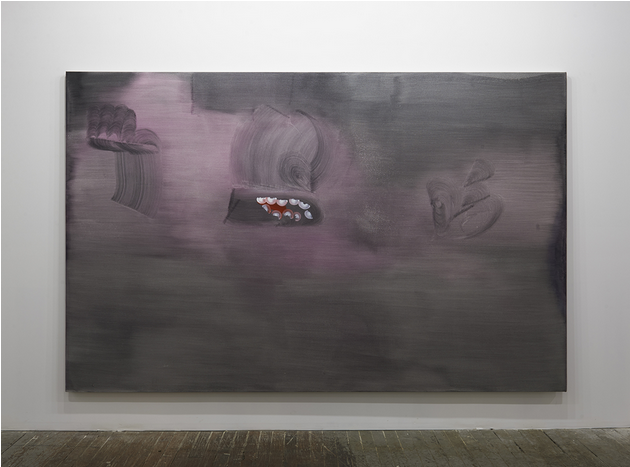
I called the first visitor Old Man South. He appeared out of a cloud of chemical smoke while I was sitting at my light table after hours. His skin was grey and wafer-thin, like cheap cardboard; his teeth were sharp and white. His mouth was fixed and open, like a defensive dog. He wore a floppy hat and his downcast eyes glowed as they were fixed to the ground. He appeared for less than a minute, but I was lucky enough to have my camera and captured his image before he disappeared. Days went by and there were no signs of him. I was perplexed by the incident, but I knew full well not to discuss it with anyone. A story like that will get you shipped right up to H.R. with a note saying something like “better keep your eyes on that one” placed in your permanent file. But keeping it a secret didn’t stop me from pouring over the image, analyzing every odd turn and dark contour. I simply couldn’t place this feeling, this experience of being in the presence of such a force. There was something terrifying about him; his bones were already partially erased - pulsating, disruptive, on the verge of I don’t know what. It was as if his very essence was suspended in the moment of his highest force of living and the oblivion of death.
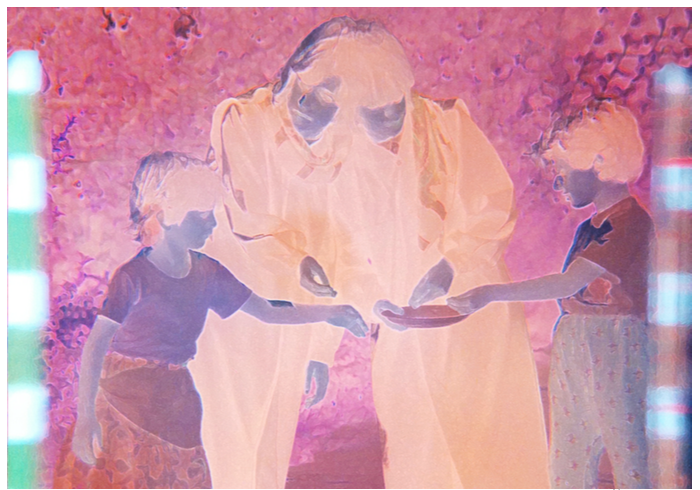
The next time I encountered the Visitors they appeared in a group of three. It was November, and the archive was particularly icy and damp. At the end of the day, all of my colleagues left and I went out to grab my 16 sweater. I was preoccupied in my research and I was in no rush to go home. Manipulated image of a negative from the Associated Press’ photo archive of 1960s civil rights riots. Since my husband left, the idea of home took on another meaning. I knew what was waiting there in those unoccupied rooms. My own thoughts filled the space, just like office life. The sensation of moving between the two places, home and work, gave me a feeling of idling, of hovering; I felt weightless. My life’s rhythm was null and flat which made everything I researched all the more spectacular. As I reentered the archive to continue my research, I suddenly heard a rumble. It was coming from the corner of the archive. As I turned the corner and walked down the aisle to approach the source of the noise and I saw them. There were three forms joined and they hovered in a lavender haze like Old Man South.
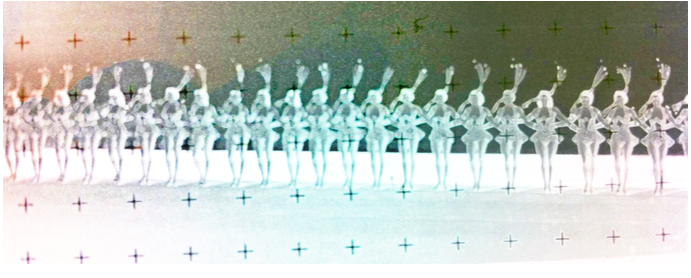
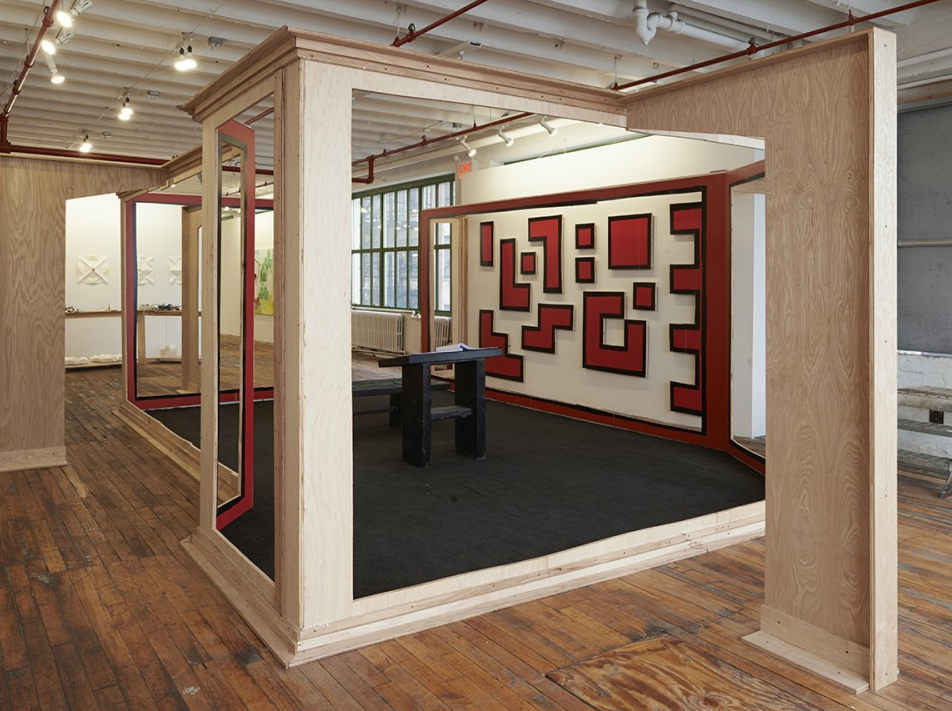
From what I could discern, although the three forms were clearly connected to one another, each possessed a corporal independence distinct from one another. The first figure had lumbering movements and a masculine countenance, the second figure was ambiguous and moved in unpredictable formations, wobbly and warped. The third figure was feminine and her arms 17 dangled loosely; her body was bent and her legs were askew. All of the figures backs were turned to me, and as the billows of smoke expanded, I saw the outline of a wooden doorframe. The figures pressed forward and I realized that I had stumbled upon some sort of way station or open door. The passageway of the doorframe was clear, and off in the distance, I could see there was a multitude of forms. The forms passed back and forth, inside and around the doorframe. The doorframe seemed more like a symbol or a marker than an actual object of utility. The airy masses were reminiscent of a multitude of disintegrating paper dolls, descending and ascending shadows hovered all around. I remember there was a sense of acceleration and anxiety to the Visitors’ movements. It quickly became clear that the scene I was witnessing was a moment of crisis, the origins of which are still unclear. I started to get the sense that the Visitors were about to disappear, so I took out my phone and photographed them. Just as I suspected, moments later the Visitors headed into the doorway and vanished.